Chest and abdomen · stand back from the camera

Take a deep breath. See where your heart lies.

The rib cage, spine and pelvis, the muscles of your chest and belly, and your heart, lungs and digestive organs, placed over your own trunk.

Your video stays on your device. Nothing is recorded.
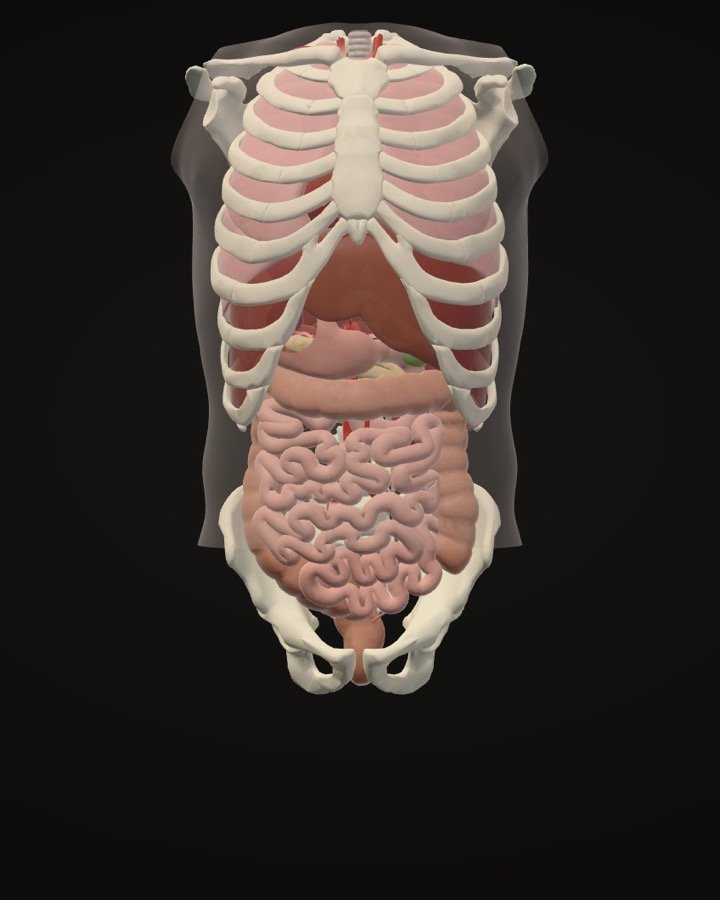
Chest and abdomen in the app’s demo: rib cage, spine and pelvis, chest and belly muscles, and the diaphragm

What you will see

  • Rib cage, spine and pelvis
  • Chest and belly muscles, and the diaphragm
  • Heart, lungs and digestive organs
  • The great blood vessels

What the camera follows

Your shoulders and hips, and your arms for the experiments. The organs are placed from these points: they show where things lie, not what yours are doing. Breathing and the heartbeat are animated.

How to stand

Stand about 1.5 to 2 m from the camera, facing it. More below.

What you need

A webcam you can step back from. On a phone, prop it up across the room.

How to stand.

The camera has to see the joints it follows. A minute spent on framing saves a lot of jitter.

1.5–2 m
  1. Stand about 1.5 to 2 m from the camera, facing it.
  2. Step back until your shoulders and hips are both in view.
  3. Keep your arms free: some experiments ask you to raise them or point.

Loose clothing is fine; the tracker finds your joints, not your outline.

Five guided experiments.

Each asks for one movement, then explains what happened inside. Spoken narration is optional. Click any structure in the app to read about it.

Open the torso view

  1. 1
    Take a deep breathThe diaphragm and the lungs (animated).
  2. 2
    Find your heartPoint to where you think it is.
  3. 3
    Lean to each sideThe oblique muscles of your belly.
  4. 4
    Raise your armsYour shoulder blades turn on your ribs.
  5. 5
    Follow your foodFrom the stomach to the large intestine (animated).